Skip to content
A.N Trader

Industry

Cement

Cement is a dry, abrasive, high-temperature process, and most of its instrumentation problems reduce to two things: dust, and the size of the equipment being moved. A kiln fan damper is not a 40 mm globe valve. A baghouse does not fail gracefully either — when the cleaning system stops working, differential pressure across the tube sheet climbs until the fan can no longer pull through it, and the process behind it comes back with it.

A.N Trader supplies the pulse valves, positioners, transmitters and cylinders those two systems depend on, in the ingress ratings a cement plant genuinely needs rather than the ones a catalogue defaults to.

Cement plant with storage silos, large ducting and a stack venting against a clear sky

Typical applications

01

Baghouse pulse-jet cleaning

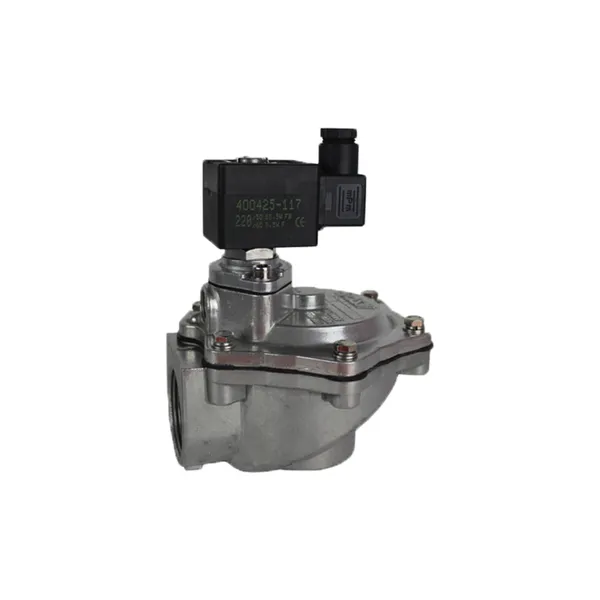
A pulse-jet dust collector cleans its filter bags by firing a short burst of compressed air down a blow pipe into the open end of each bag, snapping the fabric and dropping the dust cake into the hopper. Every requirement on the valve follows from that: open and close in a fraction of a second, pass a large volume of air while open, and repeat it for millions of cycles. Cleaning is normally sequenced on differential pressure across the tube sheet, with a timer as the fallback.
02

Kiln draught and fan dampers

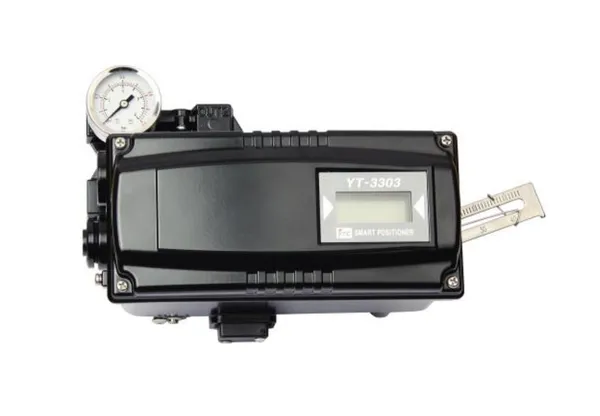
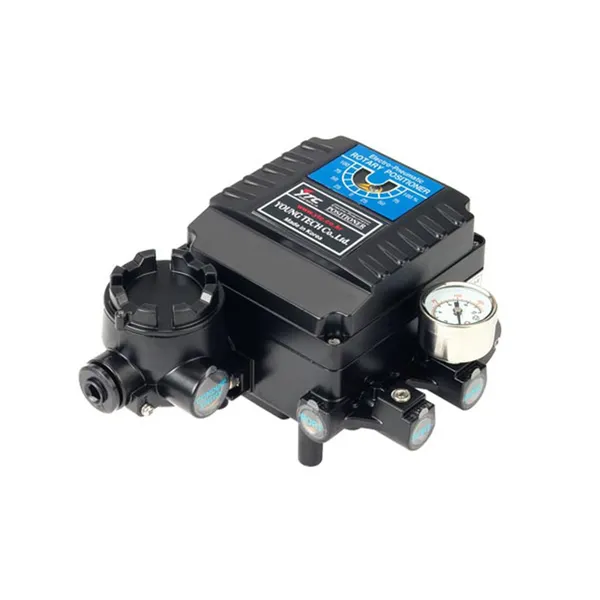
Kiln draught is held by the induced-draught fan and trimmed at its inlet damper, and the same arrangement reappears on the raw mill and the cooler. Where those dampers are pneumatically driven the actuator is large, so the positioner has to move a lot of air into it and stay in calibration under continuous vibration. Position feedback independent of the demand signal earns its place here, because a damper that has stuck is otherwise invisible from the control room.

03

Raw mill and kiln feed handling

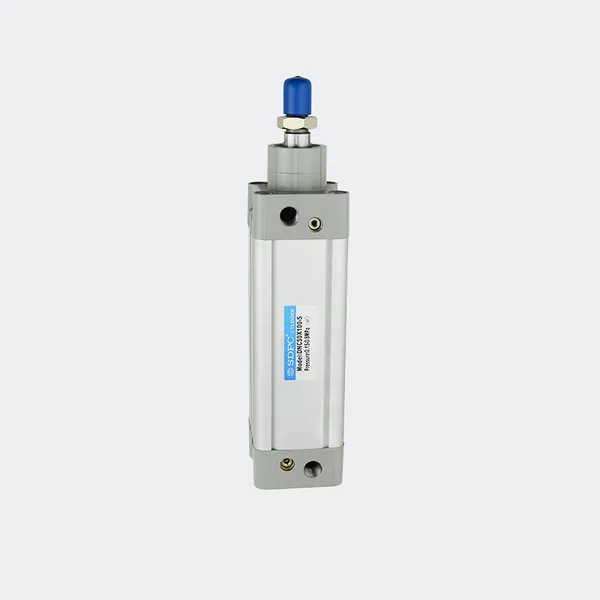
Feed to the mill and to the kiln moves through weigh feeders, airslides and diverter gates, and those gates are usually double-acting pneumatic cylinders. In control terms the duty is undemanding — open, closed, and reliably so. Mechanically it is not: abrasive dust on the rod, high cycle counts, and end-of-stroke cushioning that has to absorb the load every time.

04

Clinker cooler airflow

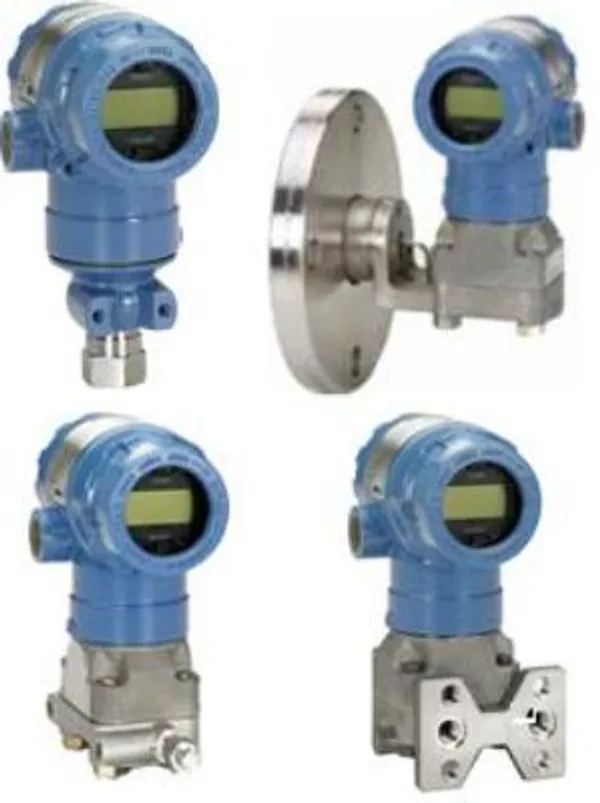
A grate cooler pushes ambient air up through the clinker bed from a row of compartments beneath the grate, and cooling efficiency depends on how that air is distributed. Under-grate pressure in each compartment is measured continuously because it reports bed depth and permeability, and the air to each compartment is trimmed by dampers. These are low-range pressure measurements that are read as a set rather than one at a time.

05

Compressed air across the plant

One header feeds dust collectors, gates and slide valves, and the demand on it is spiky rather than steady. Air arriving at a device is warm and carries whatever the compressor house did not remove. Regulating and filtering at the point of use stops a pulse-valve diaphragm or a positioner pilot relay from doing that filtration itself, which is the failure mode it will otherwise reach.

Equipment for this sector

Devices from the catalogue that suit this duty, each with the reason it was chosen. Valve size, thread form, coil voltage and enclosure certification are confirmed against your installation at the quotation stage.

Companies we have supplied

Cement and power plants A.N Trader has supplied equipment to — named companies, not a general sector claim.

  • Dewan Cement logo
    Dewan CementCement
  • Thatta Cement logo
    Thatta CementCement
  • Power Cement logo
    Power CementCement
  • Thatta Power logo
    Thatta PowerPower

Selection considerations

Dust ingress and IP rating
In a cement plant the enclosure rating is the specification rather than a footnote. Fine dust finds every gap and then holds moisture against whatever it settles on. The SCG353A047 solenoid enclosure is waterproof to IP67 and the positioners here are IP66, Type 4X. What is more often missed is the entry: an IP66 housing on an unsealed gland is an IP66 housing with a hole in it.
Air quality behind a pulse valve
A pulse-valve diaphragm lives on the quality of the air in the reservoir behind it. Water and carried-over compressor oil shorten diaphragm life and can hold a valve open at the worst possible moment. Drain the receiver, filter at the point of use, and treat the air system as part of the dust-collector specification rather than as a utility that happens to be nearby.
Classified areas around fuels
Coal mills, petcoke handling and alternative-fuel feed systems create combustible dust atmospheres and are classified in their own right. Equipment installed there needs certification appropriate to that classification, not simply a well-sealed box. The SCG353A047 is available with ATEX 2014/34/EU and IECEx solenoid options; the exact marking — group, category and temperature class — has to be matched to the hazardous-area drawing rather than assumed from the series.
Vibration and radiant heat
Everything on a kiln line vibrates, and a feedback coupling that depends on friction will eventually drift out of calibration where a positively engaged one will not. Ambient temperature beside a kiln shell or a preheater tower also sits well above the site figure. Standard YT-3300 family builds are specified from -30 to 85 °C, with low-temperature builds available — check the reading at the bracket, not at the weather station.

Where to go next

Brands on this page

Help specifying

Send the number of bags, the blow-pipe size and the existing valve marking, and we will match the pulse valve and its connection rather than guess at the series.

Consultancy and site services

Rebuilding a baghouse cleaning system?

Send the valve count, size and coil voltage and we will quote the pulse valves, coils and repair kits together.

Request a Quote